


- This event has passed.
Open-air theater
3. July – 4. July | 16:00 bis 22:00 Uhr
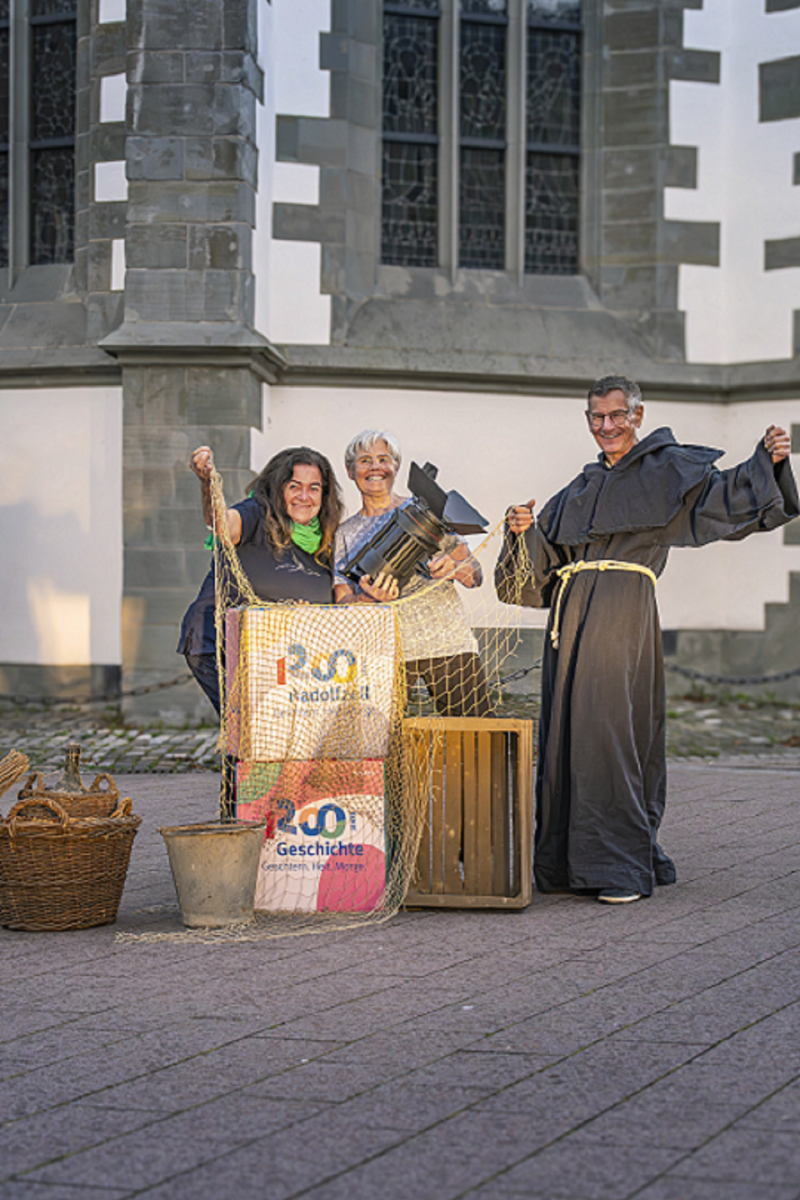
On July 3 and 4, the market square will be transformed into a stage: the history of the city will unfold in six interlinking scenes of around ten minutes each – from its founding to striking development steps and visionary ideas for the future.
An open-air production that impressively combines past and present.
The texts were written by Romy Bromma and Berthold Gruzel. The production is directed by Monique Moelter, whose creative staging concept ensures a dynamic and atmospheric performance. The play is performed without a curtain and the scenes flow into one another on the open stage. The participatory nature of the project is particularly striking: participants from the community – children, young people and adults – appear on stage together with experienced theater professionals.
Under professional guidance, they were introduced to theater and create the scenes with great liveliness and authenticity. The project sees itself as a civic cultural experience that not only entertains, but also connects. An invitation to a shared culture of remembrance – and to look to the future.
Advance ticket sales start on June 8, 2026 and tickets are available at Reservix or at the Radolfzell Tourist Information Office.
Click here for the tickets: Reservix.de
Performance dates:
Friday, July 3, 4 p.m.
Saturday, July 4, 4:30 p.m. and 8 p.m. (barrier-free performance)
Barrier-free performance on July 4 at 8 p.m.
The last performance on Saturday, July 4, at 20:00 is a special sign of inclusion in action. It will be offered as an accessible performance. There will be live audio description for blind and visually impaired visitors: a reporter will describe what is happening on stage in real time via a receiver with headphones, making what is happening in front of the audience’s eyes visible. The innovative Auracast technology is also used. It enables the stage sound to be transmitted directly to compatible hearing aids and hearing systems so that people with hearing impairments can experience the performance in significantly better sound quality. This turns the last performance into a theater experience that gives as many people as possible equal access to culture.